
Table of Contents
- How do feeder ports actually change the way birds eat?
- What makes the sealed container design so effective outdoors?
- How do you get the most from a port-based feeding setup?
- How does a coordinated port system improve the full coop routine?
How do feeder ports actually change the way birds eat?
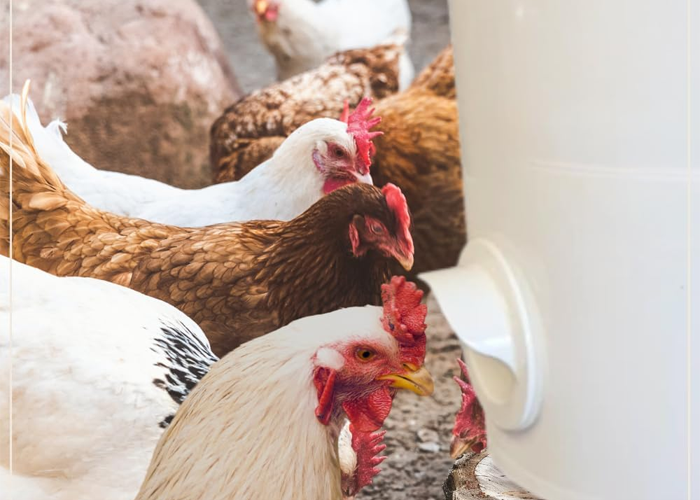
Open trays invite birds to eat from the outside edge of the container, which means grain is always just one scratch or jostle away from the coop floor. Our feeder ports for chickens flip that dynamic entirely. Each port creates a controlled opening through the side wall of a sealed bucket, which means birds have to lean in and reach deliberately to access grain rather than grazing casually from the rim.That deliberate reach changes feeding behavior in a small but meaningful way. Birds eat more calmly, more evenly, and with noticeably less grain ending up on the floor around the feeder. For a flock with a strong pecking order, three evenly spaced ports give multiple birds concurrent access, which reduces the competitive rushing that scatters feed even in a well-managed coop.What makes the sealed container design so effective outdoors?
Summer brings rain, humidity, and heat in combinations that ruin open feed trays faster than most keepers expect. A sealed bucket with port fittings handles all three without requiring any additional protection. Grain inside the container stays dry regardless of overnight weather, and the port openings are narrow enough that rain does not enter the reservoir even in a direct downpour.Our port fittings seat cleanly against the smooth interior wall of a standard five-gallon HDPE bucket, which creates a consistent seal at every opening without adhesive or sealant. That seal holds through temperature cycling across a full season of outdoor use, keeping feed fresh between refills and the exterior of the bucket clean enough to wipe down quickly during weekly maintenance.How do you get the most from a port-based feeding setup?
Getting the system running well from the start comes down to a few positioning choices that make a consistent difference once the feeder is in use. Here is what we recommend to every new Poultry Pro Feeder customer:- Position the feeder at a height that matches your average bird height at the shoulder for comfortable, natural access
- Place it in a partially shaded area of the coop to slow any UV stress on the container over time
- Space it away from the waterer slightly so feed and water stay in separate zones of the run
- Check port seating monthly and confirm each fitting sits flush against the bucket wall with no visible gap
- Refill the reservoir before it empties completely to maintain a consistent feed level and flow rate at each port
How does a coordinated port system improve the full coop routine?
A feeder is only one side of a well-functioning coop. The real difference in daily management comes when feeding and watering work on the same schedule and share the same container format. Pairing our feeder with a poultry feed port system matched to the same standard bucket gives you one consistent maintenance routine, one set of replacement parts, and a coop setup that does not ask for your attention more than it needs to.Our Poultry Pro Feeder and Poultry Pro Waterer were designed as a coordinated pair from the start, which is part of why the product line gained attention on Shark Tank as a practical, complete solution for backyard keepers rather than just a single product fix.See the Poultry Pro Feeder specs and port details and compare them against your current feeder before making a decision.The Riverbend Resources homepage shows the full product range and how feeder and waterer pair together as one complete coop system.Questions about port placement, flock size, or how our kit compares to your current setup? Reach out to our team here and we will point you in the right direction.For a fuller picture of how the water side of the coop affects summer performance, our published waterer guide covers the same principles from the hydration angle.Why Riverbend Resources Built Ports That Clean Up Your Coop From Day One
A cleaner coop is not just more pleasant to manage. It reduces pest pressure, keeps feed costs down, and reflects a system that is actually working the way it should. We built our feeder ports around those outcomes specifically, because we believe backyard chicken keeping should be straightforward and satisfying rather than a daily cleanup exercise. If your coop floor tells a different story right now, our system is where that changes.Frequently Asked Questions
1. How many port fittings come included in the Poultry Pro Feeder kit?
Each Poultry Pro Feeder kit includes three port fittings, sized and spaced for a standard five-gallon bucket to support flocks of up to fifteen birds comfortably.
2. Do the ports work with both pellet and crumble feed formulations?
Yes. Our port diameter handles both pellet and crumble formulations reliably. Mash-style feeds are less suited to gravity port feeders due to moisture content variability in most climates.
3. How far above the bucket base should the ports be positioned during installation?
We recommend positioning ports two to three inches above the bucket base as a consistent starting point, adjusting slightly upward or downward based on average bird size in your flock.
4. Can the feeder stay outside year round or does it need seasonal storage?
The Poultry Pro Feeder is built for year-round outdoor use. UV-resistant materials and a weatherproof lid seal keep the system functional through all seasons without requiring indoor storage.
5. Will the ports stay in place without any adhesive or additional sealant?
Yes. The ports press-fit into clean openings in standard HDPE bucket walls and hold securely without adhesive. The matched hole saw bit creates an opening that allows the fitting to seat with full, even contact.