
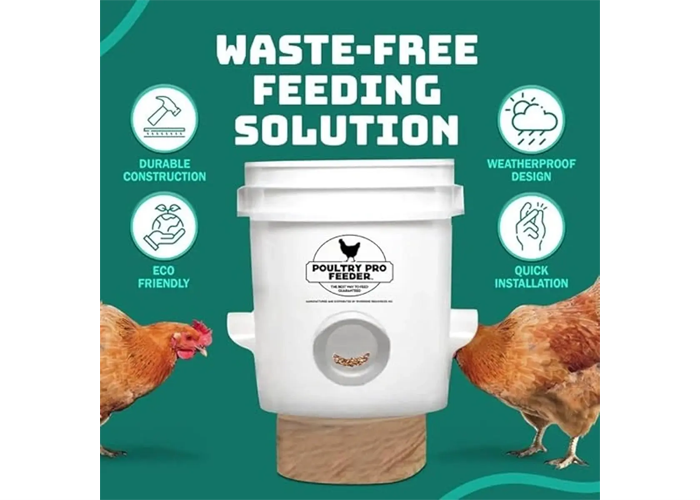
Why does feed waste cost more than most keepers realize?
University of Kentucky Extension research estimates that open trough feeders waste up to thirty percent of placed feed through spillage, moisture contamination, and bird activity combined. On a sixty-dollar monthly feed budget for a small flock, that is eighteen dollars in preventable monthly grain loss. Over a six-month active season, the cumulative figure exceeds one hundred dollars in grain that never reached a bird, paid by the keeper consistently and silently because the loss happens incrementally rather than in one visible event.The pest problem that feed waste creates adds an indirect cost on top of the direct grain loss. Scattered grain at coop floor level is the primary attractant for rodents near a structure. Once rodents establish a feeding routine near your coop, removing them requires intervention that costs time and often money on top of the ongoing grain loss that created the attraction in the first place. A no waste feeding design eliminates both problems simultaneously from its first day of operation.How does a sealed port design prevent waste at the source?
Each port on our Poultry Pro Feeder creates a controlled opening in the side wall of a sealed five-gallon bucket, positioned so birds reach in deliberately to access grain rather than grazing from an exposed tray rim. That deliberate reach contains most of the incidental spillage that open trays produce as a geometric inevitability. The grain inside the container never contacts ambient air, rain, or humidity directly. No pest can access the feed reservoir from the outside because the grain surface sits inside the sealed bucket behind the port fittings.What does correct port installation look like for the best results?
Port height above the bucket base is the single installation variable that most directly determines how well the no-waste design performs in practice. We recommend positioning ports two to three inches above the base of the container, which creates a controlled gravity flow that matches the eating pace of most laying flocks without pouring freely. The installation sequence from our Poultry Pro Feeder kit follows a clear path that produces a correct result on the first attempt rather than requiring iteration.Here is what the correct installation process looks like from marking to first fill:- Mark three port positions at equal intervals around the bucket, positioned two to three inches above the base
- Drill clean openings at each mark using the matched hole saw bit included in the Poultry Pro Feeder kit with a standard household drill
- Press each port fitting into its opening with firm, even pressure around the full circumference of the fitting flange
- Confirm each fitting sits flush against the bucket wall with no visible gap at the flange edge before filling
- Fill the bucket with grain, seat the lid, and position the assembled feeder in the coop for the first test fill
- Run a brief visual check that feed flows at a controlled rate through each port before the flock accesses the system
How does a bucket chicken waterer complete the no-waste coop setup?
The bucket chicken waterer applies the same sealed container principle to hydration that our feeder applies to grain. Our Poultry Pro Waterer snaps onto any standard five-gallon HDPE bucket and maintains a consistent trough level through a gravity vacuum mechanism that requires no float valves, no mechanical release components, and no daily adjustment. Anti-microbial materials on interior surfaces slow algae colonization, extending the clean water window from two to three days to four to six days under summer sun conditions. An optional garden hose connection fills the bucket hands-free in under two minutes from a standard spigot, removing the heaviest daily physical task from the coop routine entirely.Running both systems from the same standard bucket format means the full coop infrastructure shares one container type, one maintenance schedule, and one replacement supply chain. Both the Poultry Pro Feeder and the Poultry Pro Waterer are manufactured in the USA by Riverbend Resources and backed by a full satisfaction guarantee.What does the full Pet and Pen system deliver across a season?
Keepers who switch both the feeder and the waterer simultaneously describe the same outcomes across the first full active season: a coop floor requiring significantly less frequent sweeping, a feed budget that drops measurably within the first month, a pest situation that improves without separate intervention, and a weekly coop routine that compresses into a predictable every-other-day check for both systems together rather than daily management visits for each separately.Pet and Pen Builds Feeding Systems That Give You Back Your TimeWe designed the Poultry Pro Feeder because backyard chicken keeping should reward the keeper rather than burden them with daily grain management that a better design makes unnecessary. A no-waste feeding system paired with a consistent, anti-microbial waterer is the combination that makes that possible from the first week of use.If your current coop setup is costing you feed money, attracting pests, or demanding daily attention it should not require, our system changes all three outcomes without asking anything more from you than a fifteen-minute installation afternoon.Frequently Asked Questions
1. How many birds can one Poultry Pro Feeder support comfortably?
The three-port five-gallon design supports flocks of eight to fifteen birds, providing approximately seven to eight days between refills at standard layer pellet consumption rates documented by Penn State Extension.
2. Does the no-waste design work with crumble feed as well as pellets?
Yes. The port diameter accommodates both pellet and crumble formulations reliably. Mash-style feeds with high moisture content flow less predictably in gravity port systems and are not recommended for this format.
3. Can I install the ports into a bucket I already own?
Yes. The kit works with any smooth-walled food-grade five-gallon HDPE bucket. Textured or ribbed containers prevent the clean port seating the system requires and are not compatible with this installation.
4. How does the Poultry Pro Feeder handle overnight rain exposure?
The sealed lid protects the grain reservoir completely from rain entering at the top. Port openings face outward at the side wall and are sized to prevent rain entry during normal outdoor weather conditions.
5. What does the full satisfaction guarantee on the Poultry Pro Feeder cover?
Every Poultry Pro Feeder comes with a complete satisfaction guarantee covering the full product. Customers not satisfied for any reason receive a no-hassle return and complete refund without additional conditions.