
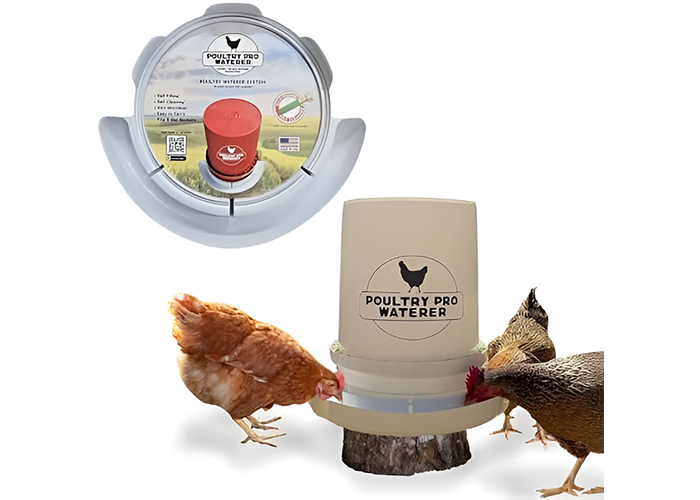
What criteria actually define the best chicken waterer?
Marketing language in the poultry waterer category is generous and largely unconstrained. Every product on the shelf claims reliability, durability, and ease of use. The criteria that actually separate the best chicken waterers from the rest of the market are measurable rather than descriptive: how many days does the water stay clean between maintenance sessions in peak summer heat, how long does the equipment perform without component failure, how much physical labor does the daily refilling require, and how much does a replacement container cost when the original eventually degrades.On all four of those measures, purpose-built design using UV-stabilized anti-microbial materials and a gravity vacuum mechanism consistently outperforms budget alternatives manufactured to a price point rather than to an outdoor performance standard. The difference is most visible in the second and third season when cheap alternatives have failed and the purpose-built option continues running without intervention.How does anti-microbial construction change summer water quality?
Summer creates ideal colonization conditions for the algae and bacteria that make waterer maintenance such a recurring summer burden. Warm water, ambient light reaching the trough surface, and the nutrient content of poultry water combine to produce biofilm on interior surfaces within three to four days of cleaning in standard plastic waterers without anti-microbial treatment. Birds detect the change in water quality and reduce intake before the water appears visibly contaminated, which means the flock health effect of algae growth precedes the visible cue that triggers most keepers to clean.A waterer that produces hydration avoidance during the weeks when adequate hydration matters most creates a flock health problem with measurable consequences for egg production and bird welfare. Anti-microbial materials in our Poultry Pro Waterer inhibit the initial surface adhesion that allows biofilm to establish, extending the reliable clean water window from two to three days to four to six days under typical summer sun conditions. That extension represents approximately forty fewer cleaning interventions across a six-month active season.Why does the gravity vacuum mechanism outperform alternatives?
Float valve waterers, nipple systems, and pressure-regulated dispensers all introduce mechanical components that outdoor temperature cycling and mineral deposits from water sources can degrade across a full season. A gravity vacuum mechanism has no float, no valve, no spring, and no solenoid: the mechanism is the physics of a sealed container maintaining a partial vacuum above a water column, which holds the reservoir in place and releases just enough water to maintain the trough level as birds drink.This mechanism has no components that corrode, jam, or fail from seasonal use. It functions identically in its first week and its fortieth week of outdoor use, provided the lid maintains its seal and the container material holds up under UV exposure. Both conditions are met by the standard five-gallon HDPE format, which is UV-stable, food-grade, and available for replacement at any hardware store for three to five dollars when eventually needed.How does hands-free filling change the daily coop routine?
A full five-gallon bucket weighs over forty pounds. Managing that weight across a coop yard in summer heat, daily or more frequently for a larger flock, accumulates into a physical burden that most keepers underestimate before their first August routine. Our Poultry Pro Waterer connects to a standard garden hose through an internal venting tube, filling from a spigot in under two minutes without any lifting of the full container. The venting tube determines the fill level automatically: water enters through the hose connection, fills to the top of the tube, and stops when the hose is turned off.What does the automatic chicken waterer feature deliver in practice?
The automatic chicken waterer designation applies to our Poultry Pro Waterer because once it is filled and positioned, it maintains a consistent trough level without any mechanical timers, float adjustments, or daily manual intervention. The gravity vacuum mechanism manages the trough fill level autonomously as birds drink, releasing water to restore the set level and stopping automatically when the trough returns to it.What the automatic maintenance of trough level delivers for the keeper across a summer:- Consistent water availability for the flock regardless of when the keeper checks the coop during the day
- Trough level maintained through morning peak drinking and afternoon heat-driven consumption increases without manual adjustment
- Anti-microbial materials maintaining water cleanliness through the extended intervals between cleanings that the automatic fill mechanism enables
- No daily physical intervention required between filling sessions, which typically span one to two days for a twelve-bird flock in peak summer heat
- Hands-free hose refilling completing the full automation of the system from fill to trough maintenance
Pet and Pen Builds Waterers for the Hardest Weeks, Not the Easiest Ones
The best waterer is the one that performs correctly through the heat wave that arrives without warning, the schedule that leaves no time for a midday coop check, and the flock that needs clean water continuously regardless of either. Our Poultry Pro Waterer is built specifically for those conditions using USA-quality anti-microbial materials, a gravity vacuum mechanism with no moving parts, and a hands-free filling design that removes the hardest physical task from the coop routine. If your current waterer is falling short when it matters most, ours is engineered to perform exactly where yours stops.Frequently Asked Questions
1. What size flock does the Poultry Pro Waterer comfortably support through summer?
The five-gallon design supports eight to fifteen birds through approximately one to two full days of peak summer consumption before the trough requires a refill, based on the Merck Veterinary Manual consumption data.
2. Does the hands-free hose filling work with any garden hose?
Yes. The internal venting tube connects to a standard garden hose fitting. The filling mechanism requires standard municipal water pressure and does not work correctly with rain catchment or low-pressure pump water sources.
3. How often should the Poultry Pro Waterer be cleaned during peak summer use?
We recommend rinsing the trough every two to three days and performing a full lid and bucket clean weekly during summer. Anti-microbial materials extend the reliable clean water window significantly compared to standard plastic alternatives.
4. Can the Poultry Pro Waterer be used year-round including in winter climates?
Yes. The system is designed for year-round outdoor use. In climates with freezing temperatures, we recommend pairing it with a submersible bucket water heater to maintain liquid water availability overnight.
5. What happens if the vacuum seal in the lid is lost over time?
A lost vacuum seal causes the trough level to drop irregularly rather than maintain consistently. Inspect the lid contact surface periodically and replace the bucket if a crack develops in the container wall around the lid rim.