
Table of Contents
- What are DIY chicken ports and how do they work?
- Why does a 5 gallon poultry feeder outperform smaller designs?
- How do you install feeder ports the right way?
- What mistakes do first time builders make?
- How does a port based feeder save money over time?
- Frequently Asked Questions
What are DIY chicken ports and how do they work?
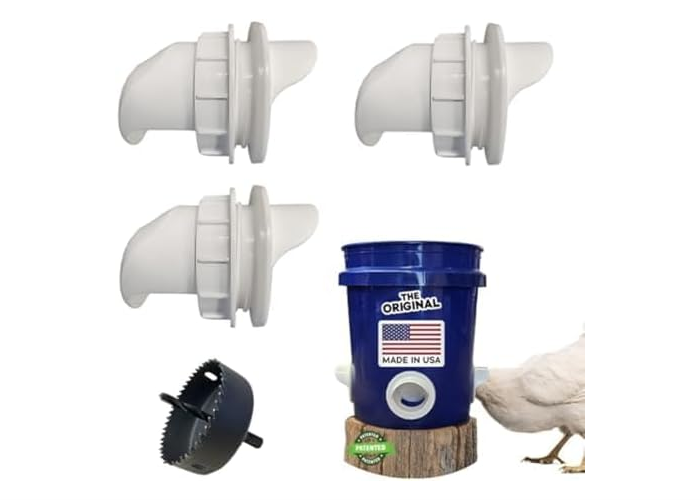
A feeder port is a simple fitting that attaches to the side of a plastic container, allowing chickens to reach inside and eat without scattering grain across the ground. The concept is straightforward, but the execution matters. Poorly designed ports either let too much feed spill out or restrict access so much that smaller birds cannot eat comfortably.Our Poultry Pro Feeder ports are engineered to solve both problems at once. Each port creates a controlled feeding opening that keeps grain inside the bucket while allowing birds to eat naturally and without crowding.Why does a 5 gallon poultry feeder outperform smaller designs?
We recommend the five gallon format to almost every customer who asks about sizing, and the reasoning is practical. A smaller container requires daily refilling, which becomes a real burden during summer when birds consume more feed to maintain body temperature and egg production.The 5 gallon poultry feeder format holds enough grain to last most small to medium flocks two to four days between refills. That alone reduces daily coop time significantly, freeing owners up for the rest of summer life without worrying about an empty feeder by afternoon.Five gallon buckets are also inexpensive and widely available. Most hardware stores carry them, which means replacements are easy to find and the overall system costs far less than most specialty feeders sold as a single unit.How do you install feeder ports the right way?
Installation is where many first time builders lose confidence, but our kit makes it straightforward. Here is how we walk customers through the process:- Mark port locations evenly around the lower third of the bucket
- Use the included hole saw bit with a standard drill to cut clean openings
- Press each feeder port firmly into the opening until it seats flush
- Fill the bucket with feed, replace the lid, and flip it into feeding position
- Check that each port sits level so feed flows evenly from all openings
What mistakes do first time builders make?
The most common mistake we see is placing ports too low on the bucket. When ports sit at ground level, feed flows out too fast and spills before birds can eat it. Positioning ports two to three inches above the base of the bucket controls flow naturally and extends the time between refills.The second mistake is using containers with textured or irregular surfaces that prevent ports from seating properly. Smooth walled buckets create the best seal, and standard five gallon containers from hardware stores almost always meet that requirement.How does a port based feeder save money over time?
We hear this question from keepers who are skeptical that a feeder can actually reduce costs, and the answer consistently surprises them. Open feed trays lose grain to wind, rain, and active birds constantly, often wasting fifteen to twenty percent of feed purchased each month.Sealed ports eliminate most of that loss at the source. Customers who track their feed purchases before and after switching regularly report measurable savings within the first few weeks. Over a full summer, those savings add up to far more than the cost of the kit itself.Explore the Poultry Pro Feeder kit and see exactly what comes included before your next hardware store trip.Our matching waterer is designed to work alongside the feeder as one complete system. You can find it alongside the feeder on our full product page.If you have questions about sizing, port placement, or bucket compatibility, our team is always ready to help. Reach us directly here.For more on how feeders and waterers work together, our chicken feeder vs waterer guide breaks down which upgrade makes the most sense first.Why Riverbend Resources Is the Smarter Starting Point
We did not design our feeder kits to be the cheapest option on the market. We designed them to be the last feeder most keepers ever need to buy. Every port, every seal, and every included tool reflects a decision made around real coop conditions, not just manufacturing convenience. If you are ready to stop wasting feed and simplify your summer routine, we are confident our system will deliver exactly that.Frequently Asked Questions
1. How many chickens can one DIY feeder port kit support?
Our three port kit comfortably supports flocks of up to fifteen birds. Larger flocks may benefit from adding individual ports, which we also carry separately.
2. Does the bucket need to be a specific brand for ports to fit correctly?
No specific brand is required. Most standard smooth walled five gallon plastic buckets work well with our ports, including those from major hardware retailers.
3. Can feeder ports be removed and reused on a different bucket?
Yes. The ports can be removed with gentle pressure and reinstalled on a new bucket if the original container becomes damaged or needs replacement.
4. Is the 5 gallon poultry feeder weatherproof once assembled?
When installed correctly on a sealed bucket with a tight fitting lid, the assembled feeder is fully weatherproof and handles rain, humidity, and direct summer sun.
5. How do DIY chicken ports prevent rodents from accessing feed?
The sealed port design keeps feed inside the bucket rather than scattered on the ground. Rodents are drawn to spilled grain, so eliminating spillage removes the primary attraction.